How Rising Material and Labor Costs Are Affecting Remodeling Costs in Berks County Pennsylvania
A remodeling estimate that looked reasonable two years ago may not hold up today. Homeowners across Berks County are seeing higher project costs, longer lead times, and more pricing changes between the first conversation and the final contract.
The main reasons are simple, even if the effects are frustrating: materials cost more, skilled labor costs more, and contractors have less room to absorb surprises. Cabinets, lumber, flooring, drywall, electrical components, plumbing fixtures, roofing products, fasteners, and even delivery fees can shift the final price. At the same time, licensed tradespeople are in demand, and the cost of keeping quality crews on the job has risen.
That does not mean remodeling is out of reach. It does mean budgets need to be more realistic, planning needs to start earlier, and allowances need to be handled carefully. In Berks County, where housing stock ranges from historic homes in Reading to newer builds near Wyomissing, Exeter, Sinking Spring, Kutztown, and Fleetwood, the age and condition of the home can magnify these cost changes.

Material costs are changing the way remodeling budgets are built
Material pricing has always moved up and down, but recent swings have made remodeling estimates harder to lock in for long periods. A contractor may price a project based on current supplier numbers, then need to update the estimate if the homeowner waits several months to approve the work.
The biggest pressure often comes from everyday building materials, not just luxury finishes. A remodel depends on many parts that are easy to overlook:
Framing lumber and sheathing
Drywall, joint compound, and insulation
Copper wiring and electrical panels
PVC, PEX, copper, and other plumbing materials
Roofing shingles, underlayment, and flashing
Cabinets, countertops, and hardware
Tile, flooring, adhesives, and grout
Windows, doors, and trim
Paint, primer, caulk, and sealants
Even small increases across many categories can add up. A kitchen remodel, for example, may include cabinets, flooring, lighting, plumbing fixtures, electrical upgrades, drywall repair, counters, tile, paint, and appliance hookups. If several of those categories rise at once, the total cost can move noticeably.
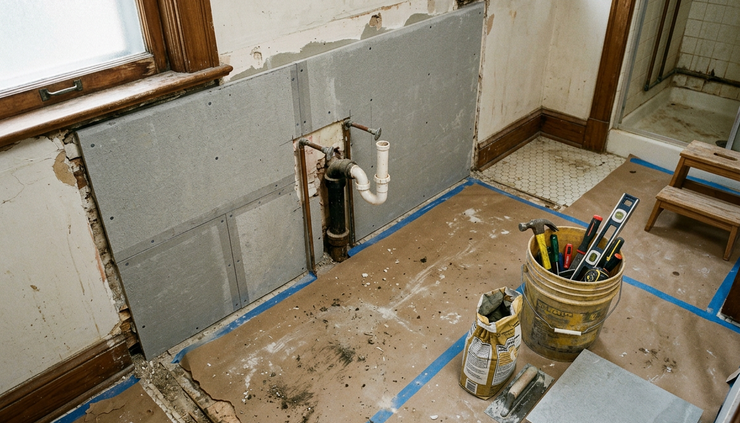
Local factors matter too. In Berks County, many homes were built decades ago. Older homes can require extra materials once work begins. A wall opened for a bathroom renovation may reveal outdated plumbing, undersized wiring, failing insulation, or uneven framing. Those are not cosmetic upgrades. They are often needed to make the finished remodel safe, code compliant, and durable.
Shipping and availability also affect price. When certain products are backordered, homeowners may face a choice: wait for the original selection or switch to a product that is available sooner, sometimes at a higher cost. This happens with cabinets, specialty windows, tile, fixtures, and some mechanical equipment.
That is why a good estimate should show where the money is going. The more detailed the proposal, the easier it is to understand which parts are fixed, which parts are allowances, and which parts could change.
Labor costs are rising because skilled remodeling work is in high demand
Materials are only half the story. Labor has become one of the biggest drivers of remodeling costs in Berks County Pennsylvania. Quality remodeling depends on skilled workers who can handle demolition, framing, finish carpentry, electrical, plumbing, tile, drywall, painting, roofing, siding, and project management.
Those skills are not interchangeable. A low bid from an inexperienced crew can become expensive if the work needs to be corrected later.
Remodeling is also more complicated than new construction. Crews must work around existing walls, old framing, occupied homes, uneven floors, outdated systems, and earlier repairs that may not meet current standards. A bathroom remodel in a 1950s house can take more problem-solving than the same bathroom layout in a new build.
Several labor-related costs affect the final price:
Wages and subcontractor rates have increased
Skilled tradespeople are in demand. Electricians, plumbers, carpenters, tile setters, roofers, and HVAC technicians all face full schedules in many markets. Contractors need to pay competitive rates to keep reliable help.
Insurance, vehicles, and fuel cost more
A professional remodeling company carries insurance, maintains vehicles, buys tools, pays for fuel, and handles scheduling. These business costs get built into project pricing.
Code knowledge and permitting take time
Permits, inspections, and code requirements protect the homeowner, but they also require planning. Projects involving structural changes, electrical work, plumbing changes, additions, decks, or major mechanical work often need more coordination.
Good project management has value
A remodel is a sequence. If framing is delayed, electrical and plumbing can be delayed. If drywall is not ready, cabinets may need to wait. A well-run project reduces wasted time, but managing that schedule takes experience.

Berks County homeowners sometimes compare remodeling bids and wonder why one contractor costs more than another. The difference may come from the quality of materials, the experience of the crew, the level of insurance, the project timeline, the warranty, and whether the estimate includes necessary prep work.
A detailed bid may look higher at first, but it can be more honest. A vague bid can grow after change orders start.
Some projects feel the increase more than others
Not every remodel is affected the same way. A basic paint and flooring refresh may still be easier to control than a full kitchen, bathroom, basement, addition, or whole-home renovation.
The projects most exposed to rising costs usually share a few traits. They use many different materials, require licensed trades, or involve unknown conditions behind walls and floors.
Project type | Why costs can rise | What to watch closely |
Kitchen remodeling | Cabinets, counters, plumbing, electrical, flooring, and lighting all add up | Cabinet allowances, countertop material, appliance changes |
Bathroom remodeling | Tile, waterproofing, fixtures, ventilation, and plumbing require skilled labor | Hidden water damage, subfloor repair, fixture quality |
Basement finishing | Framing, insulation, electrical, flooring, moisture control, and egress needs vary | Ceiling height, dampness, code requirements |
Additions | Foundations, framing, roofing, siding, HVAC, electrical, and permits affect price | Site conditions, matching existing finishes |
Exterior remodeling | Roofing, siding, windows, doors, and trim depend on product availability | Weather delays, flashing details, structural repair |
Kitchens and bathrooms often feel the biggest pressure because they require both finish materials and skilled trades. Tile work, for example, is labor intensive. A more complex tile pattern or large-format tile can increase the cost even if the room is small. Cabinets can also swing a budget quickly. Stock cabinets, semi-custom cabinets, and custom cabinets are very different price categories.
Basements in Berks County can bring their own issues. Moisture, older foundation walls, low ceilings, and mechanical systems may affect what can be finished and how the space must be built. A low-cost basement estimate that ignores moisture control can lead to expensive problems later.
Additions face broader cost pressure. They often require excavation, concrete, framing, roofing, siding, insulation, windows, doors, HVAC changes, electrical service review, and inspections. When several trades are involved, labor cost changes become more noticeable.
Exterior projects have weather and access challenges. Roofers and siding crews must plan around storms, heat, cold, and material deliveries. If hidden rot appears after old materials are removed, repair costs can increase.
The key is to compare projects by scope, not just size. A small bathroom with plumbing changes and custom tile may cost more than a larger room with simpler finishes.
Homeowners can control some costs with better planning
Rising costs do not mean every budget is out of control. The best way to protect a remodeling budget is to make decisions early and reduce uncertainty before work begins.
Start with a clear scope. A contractor cannot price accurately if the project is still vague. “Update the kitchen” can mean new paint and counters, or it can mean removing walls, relocating plumbing, replacing floors, and adding custom cabinets. Those are very different projects.
It helps to separate the remodel into three categories:
Needs
These are the parts required for safety, function, code compliance, or long-term durability. Examples include electrical upgrades, plumbing repairs, water damage repair, ventilation, structural work, and proper waterproofing.
Wants
These improve comfort, appearance, or convenience. Examples include upgraded countertops, custom storage, heated floors, specialty tile, larger showers, or premium fixtures.
Nice-to-have items
These are features that can be added if the budget allows. Examples include built-in benches, decorative lighting, upgraded hardware, accent walls, or high-end smart controls.
This approach makes it easier to adjust the scope without cutting the parts that matter most.
Homeowners can also reduce cost surprises by making selections before construction begins. Cabinets, flooring, tile, fixtures, paint colors, lighting, and hardware should not be left until the last minute. Late decisions can delay the job and create rushed purchases.
Allowances deserve special attention. An allowance is a placeholder amount for a product that has not been selected yet. For example, a bathroom estimate might include an allowance for tile or fixtures. If the final selection costs more than the allowance, the project price goes up.
A realistic allowance is helpful. An allowance that is too low only makes the estimate look better on paper.

A contingency fund is another smart tool. Remodeling older homes can reveal surprises. Setting aside extra money for unknowns can prevent stressful decisions later. The right amount depends on the project and the home’s condition, but older homes and larger projects usually need more cushion.
It also helps to ask contractors direct questions before signing:
What is included in the estimate?
What is excluded?
Which items are allowances?
How long is this pricing valid?
What could cause a change order?
Who handles permits and inspections?
How are hidden conditions handled?
What happens if selected materials are delayed?
How are payments scheduled?
These questions are not about challenging the contractor. They are about making sure both sides understand the same project.
Cheaper is not always less expensive
When prices rise, it is natural to look for the lowest bid. That can work for simple, low-risk projects, but it can backfire on complex remodels.
A very low estimate may leave out important work. It may assume cheaper materials, minimal prep, limited cleanup, no permit handling, or lower labor standards. It may also rely on change orders later. The homeowner signs for one number, then discovers that necessary parts were not included.
The better comparison is value. A strong remodeling proposal should explain the work clearly, set realistic expectations, and include materials that fit the project. The contractor should be able to explain why certain steps are needed.
For example, bathroom waterproofing is not the place to cut corners. Neither is electrical work, structural framing, flashing, ventilation, or subfloor repair. These parts often disappear behind finished surfaces. If they fail, the repair can be far more expensive than doing the job right the first time.
There are still good ways to reduce cost without sacrificing the whole project:
Keep plumbing fixtures in the same locations when possible
Choose durable midrange materials instead of premium finishes
Use a simpler tile layout
Refinish or repaint when replacement is not necessary
Phase the project instead of doing everything at once
Choose standard sizes for cabinets, windows, and doors
Avoid major layout changes unless they solve a real problem
The smartest savings usually come from design choices, not shortcuts in the work itself.
A homeowner might choose a less expensive vanity, but still invest in proper plumbing and waterproofing. Or they might choose luxury vinyl plank instead of hardwood in a basement, especially where moisture is a concern. Those are practical tradeoffs.
What this means for remodeling in Berks County
Berks County has a mix of home types, and that mix affects remodeling costs. Older row homes, stone farmhouses, mid-century ranch homes, split-levels, townhomes, and newer subdivisions all create different challenges.
A remodel in an older Reading home may involve plaster walls, aging wiring, narrow access, or previous repairs. A project in a newer suburban home may have fewer hidden issues, but still face higher cabinet, flooring, labor, and fixture costs. Rural properties may add travel time, site access concerns, or septic and well considerations for certain projects.
Local permitting can also vary by municipality. A project in one township may not follow the exact same process as a project in another. Contractors who work regularly in the area often know what to expect, but homeowners should still build time for approvals and inspections.
Seasonality matters as well. Exterior projects are often easier to schedule during milder months, while interior remodels may happen year-round. Busy seasons can affect availability for contractors and subcontractors. Waiting until the last minute may limit choices or push work farther out.
The best preparation is a realistic budget and a clear plan. Instead of asking, “What is the cheapest way to do this?”, ask a better question: “What is the right way to spend the budget so the finished project lasts?”
That mindset helps prioritize the work that matters. It also reduces disappointment when prices do not match older expectations.
A practical path forward
Rising material and labor costs are changing remodeling in Berks County, but they do not have to stop a well-planned project. They simply make planning more important.
Start earlier than you think you need to. Gather ideas, define the scope, choose priorities, and talk with contractors before the target start date is close. Ask for detailed estimates, not rough guesses. Make selections early. Keep a contingency fund for hidden conditions. Compare bids by scope, quality, and clarity, not just the bottom line.
The most successful remodels today are not always the biggest or most expensive. They are the ones where the budget, design, materials, and labor plan all match from the beginning.
Costs may keep shifting, but a careful plan still gives homeowners the best chance at a remodel that feels worth the investment when the dust settles.


Comments